
Tracing Texarkana Directory Collections
Texarkana's historical shelf is spread among catalogs and research rooms rather than one complete local run. The broadest verified catalog title is the FamilySearch collection for Arkansas-side directories from 1904 through 1960. Separate citations push the record earlier, while later Polk and telephone holdings extend the shelf well beyond that span. Each catalog describes a surviving item, not a promise that every year was printed or can be viewed from home.
The following coverage table keeps city books, reverse books, phone lists, and companion sources distinct. It also shows the right fallback when a digital image is not open. A FamilySearch image may call for an affiliate visit. Briscoe Center material is a research-library request. Local databases may require a Texarkana Public Library card or an in-library session.
| Collection | Years or span | Research location | Access route |
|---|---|---|---|
| Texarkana city directories | 1899 citation; 1904-1960 catalog run; Polk holdings through 1980 | FamilySearch, St. Louis County Library, Briscoe Center | Catalog, affiliate center, microfilm, or research visit |
| Kriss Kross Directory | August 1948 | Briscoe Center, UT Austin | Research-library access |
| Telephone directories | Selected issues from 1908; dense series from 1953-1998 | Briscoe Center | Research-library access |
| Census schedules | 1880 onward; public through 1950 | NARA, FamilySearch, HeritageQuest | Free federal images or library database |
| Sanborn maps | Multiple historic editions | Library of Congress | Free digitized sheets |
The verified dates should be read with care. A Polk volume held through 1980 does not establish the final print year, and a catalog gap does not prove no book existed. The safest citation names the publisher and year exactly as the volume's title page gives them.
Texarkana Directory Years on Film
Microfilm evidence gives a firmer year-by-year route than a broad catalog span. The St. Louis County Library run lists 1904, 1906, 1908, 1910, 1912, 1914 through 1918, 1920 through 1925, 1927 through 1931, and 1934. Historic-register sources also cite R.L. Polk books for 1899, 1904, 1906, 1910, 1917, 1924, 1931, 1940, and 1970. They identify a Southern Directory Company issue for 1920-1921.
Later shelf records at the Briscoe Center directory database include Polk copies for 1924, 1927, 1931, 1934, 1963, 1968, 1969, 1972, 1974, 1976, and 1980. The captured Briscoe page shows how a researcher can choose a location and inspect individual titles rather than assume one unbroken Texarkana city directory series.
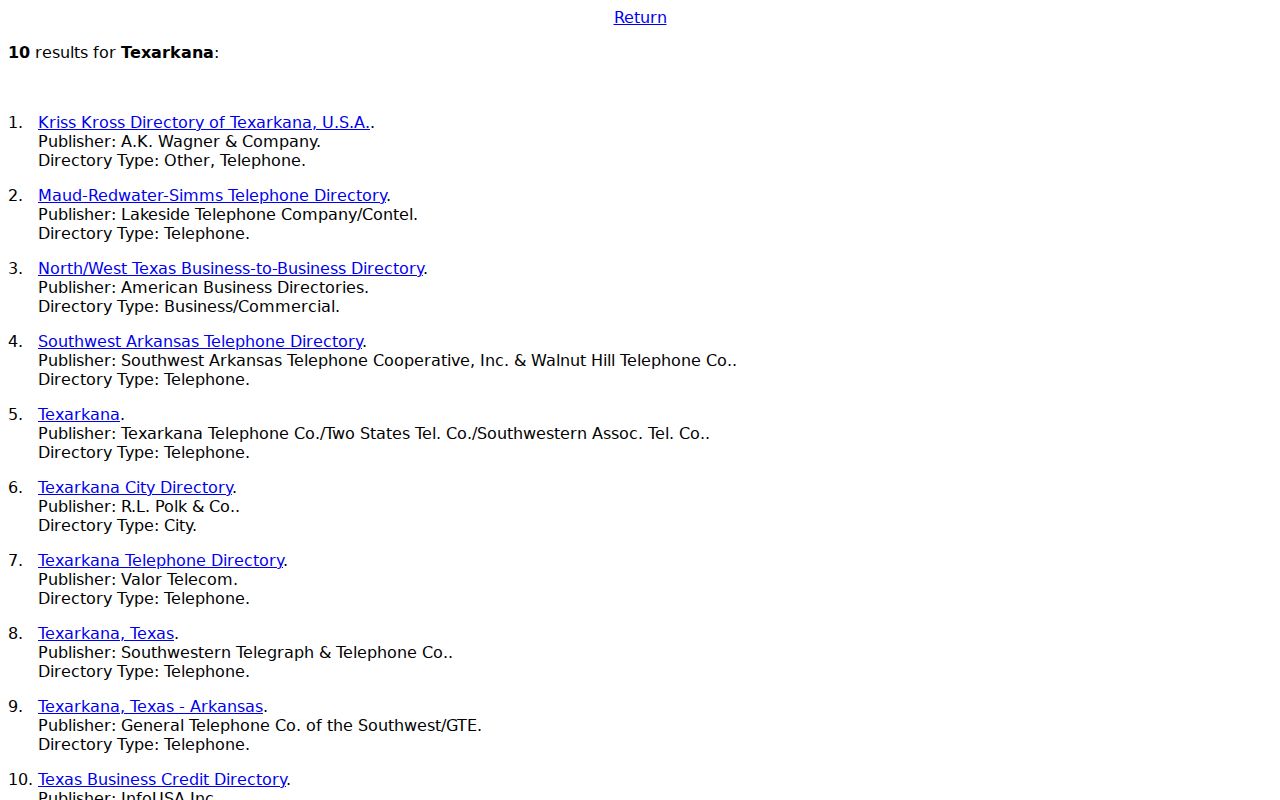
That title-level method matters because publisher, format, and geographic reach change. Note the year, publisher, book type, and stated coverage before using any entry as proof.
Note: A missing catalog year may reflect a shelf gap, an index variation, or a publication gap rather than a missing household.
Texarkana Directories Cross State Line
Texarkana presents a rare reading problem. One metropolitan book may mix Arkansas and Texas residents, yet deeds, courts, voters, and vital records remain under separate custodians. State Line Avenue is more than a street in the directory trail. An Arkansas address points toward Miller County. A Texas address points toward Bowie County, outside this Arkansas project.
Early books reflect a rail city whose daily life crossed that line. Railroad staff, hotels, depots, boarding places, and downtown firms may appear together even when their official records do not. Telephone issues can also cover nearby communities. A Texarkana listing therefore proves that the publisher included the subscriber or household, but it does not by itself prove a home stood within Arkansas city limits.
State-side check. Record the full address, the “Ark.” or “Tex.” label, and the place of work before choosing a courthouse or archive.
Read a Texarkana Directory Entry
An alphabetic entry compresses several clues into one short line. A typical early twentieth-century listing may give surname, given name or initials, a spouse in parentheses, an occupation, a place of work, and a residence. Business entries may name the proprietor and street address. Later formats can differ, so the printed key controls the meaning.
| Personal name | Surname and given name or initials; later conventions may add a spouse. |
|---|---|
| Occupation clue | Trade, employer, or an abbreviated firm or shop. |
| Residence clue | House number and street, sometimes paired with a state-side label. |
| Household clue | “wid” can identify a widow; “bds” can show that a person boards. |
| Business clue | Firm name, proprietor, and business address may appear separately. |
Common marks include “h” for house or home, “r” for rooms or resides, “bds” for boards, and “wid” for widow. Those are common meanings, not a substitute for the book's own key. Capture the title page and abbreviation page with the entry.
- Criss-cross directory
- A reverse list arranged by street address, designed to turn a place into a subscriber or householder name.
- Householder index
- A name or address tool that points to the person listed at a home, depending on the volume's format.
- Abbreviation key
- The publisher's own legend for short forms used in names, occupations, addresses, and household status.
Reverse Texarkana City Directory Search
The standout reverse source is A.K. Wagner & Co.'s Kriss Kross Directory of Texarkana, U.S.A. from August 1948. Held by the Briscoe Center, it changes the search from “Where did this person live?” to “Who was listed at this address?” That makes it useful when a photo, deed, letter, or family note supplies a street but no resident name.
A street guide and a telephone directory are not the same thing. The city book may include a street section that groups householders by address. A phone book groups subscribers and can omit those with no listed service. Test the reverse result against the alphabetic section, then use a Sanborn sheet or census schedule to place the building and household in context.
For current address-keyed sources, the Texarkana streets search follows the modern assessor and deed route without recasting these historical collections.
Texarkana Directory Research Desks
No single desk holds the whole trail. The Texarkana Public Library research databases include FamilySearch, HeritageQuest, HeritageHub, and Fold3. The library's joint-city role is useful when a household crossed the state line. HeritageQuest supports census and book research, HeritageHub supplies obituary material, and Fold3 adds military files. Ask staff what access needs a card or an in-library session.
The FamilySearch Texarkana catalog is the verified route to the broad city-book run. Its captured results provide a catalog starting point, while image access can vary by item and may require a FamilySearch center or affiliate library.
Catalog records should be copied with their title, dates, and access note. The Texarkana Museums System's Wilbur Smith research collections add regional photos, manuscripts, rare books, pioneer-family files, and directory material through an appointment or reference inquiry.
Texarkana Records Beyond Directories
Some searches begin with a person too young, too mobile, or too briefly present to appear clearly in a household volume. The University of Arkansas Hope-Texarkana library and school yearbooks can help with a former classmate. The UA Hope-Texarkana library offers a catalog and library services, while access rules for archives and yearbooks vary.
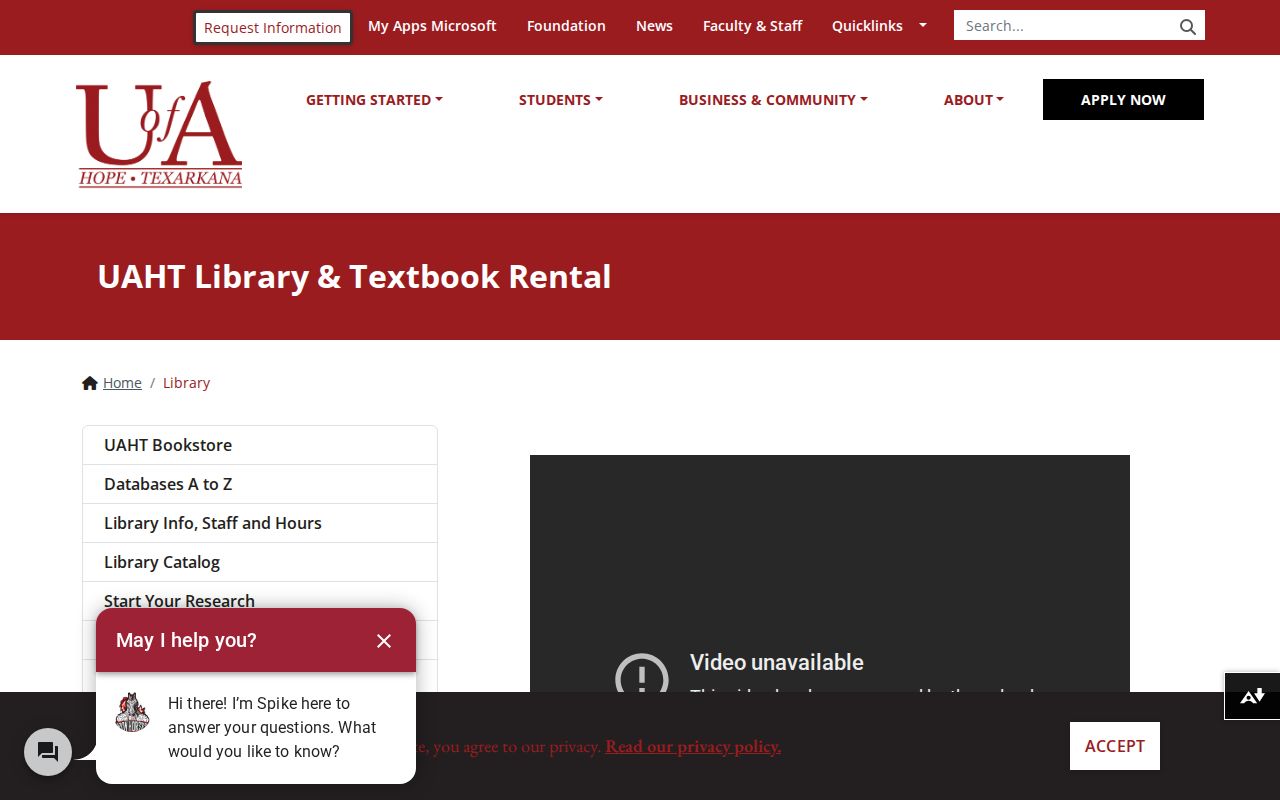
The library page gives a direct institutional route instead of an unsourced name list. Pair yearbook evidence with a directory, census, or obituary before treating two names as the same person.
The Texarkana Gazette and library newspaper files add obituaries, civic notices, and address or business events. Arkansas State Archives supplies a catalog, maps, newspapers, county records, and reference service on site, by request, or digitally where available. These companion records explain a move or name change that the short city-book entry cannot.
Texarkana City Directory Timeline
Local record history explains why the shelf has hard edges. Texarkana formed at a rail junction in 1873 and incorporated on the Arkansas side in 1880. Miller County itself was created in 1820, abolished in 1838 amid boundary issues, and re-created in 1874. Early county research can therefore lead to a neighboring jurisdiction or archival collection.
- 1899: the earliest verified directory citation appears in historic-register sources.
- 1904-1960: FamilySearch catalogs the broad Arkansas-side run under one collection title.
- 1920-1921: a Southern Directory Company volume sits among years also associated with Polk.
- August 1948: A.K. Wagner & Co. publishes the verified Kriss Kross book.
- 1953-1998: Briscoe holdings show a dense GTE telephone series, with a gap noted after 1996 before 1998.
State registration adds another timeline. Arkansas birth and death registration begins in 1914, and state marriage coupons begin in 1917. Earlier life events need county, church, cemetery, news, census, or family sources. A modern database cannot erase those older gaps.
Trace Texarkana Families by Directory
A strong family-history search records change across time, not just one match. Begin with the closest known year. Preserve the exact spelling, initials, address, state side, occupation, spouse notation, and every mark from the publisher's key. Then move to the next available year in each direction.
- Find the person in one exact volume and save the title page, key, and full entry.
- Move through nearby years to mark the first appearance, last appearance, and each address shift.
- Check any street section for other names at the same place, but do not assume every person was listed.
- Pair the 1910, 1920, 1930, 1940, or 1950 directory clue with the matching public census household.
- Use marriage, obituary, deed, or probate evidence to test a surname change, death, or move.
Disappearance has several possible causes. The person may have moved, died, changed names, skipped an issue, lived outside the publisher's limits, or appeared under another spelling. One negative search settles none of those. A historical Texarkana find that needs a modern official check can move to the resident lookup workflow, where current sources are kept separate from the old shelf.
Note: Treat each directory as one dated observation, then use an independent record to confirm the person, address, and state side.